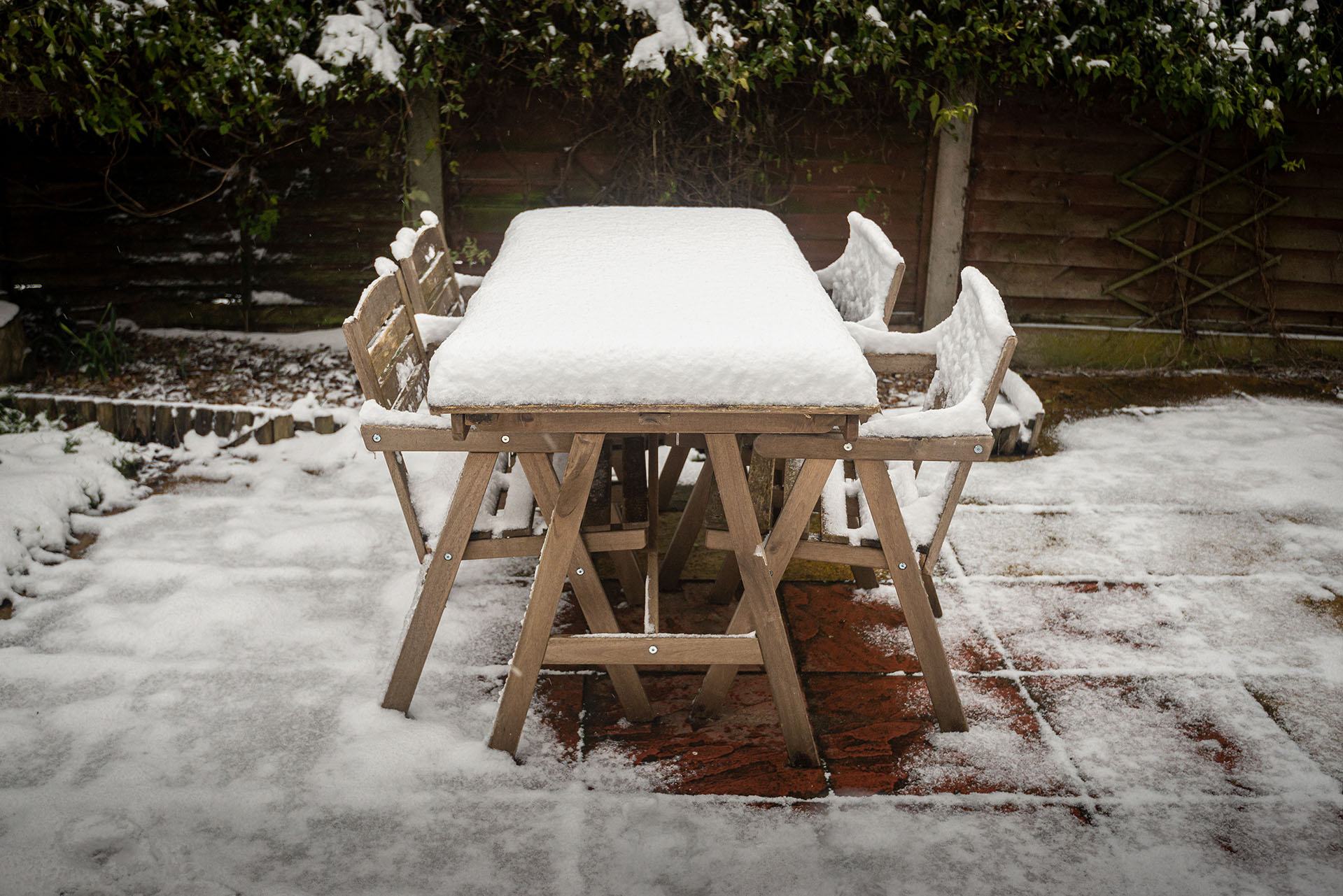
A teak bench left out from November to March can grey and split. A rattan set left under a cover can grow mould without anyone noticing. And a shed crammed with cushions, parasols and a barbecue tends to cost you a few items every year to damp or mice. Storing garden furniture over winter properly means less money spent replacing things in spring.
This guide covers how to prepare each type of outdoor furniture, what to do with cushions and equipment, and when it makes sense to move the lot out of the garden altogether.
In short: clean and dry everything thoroughly before it is put away, treat wood and metal against the weather, store cushions and fabrics indoors in breathable bags, keep items off bare floors, and never put anything away damp. If you have no dry space at home, off-site storage on a pallet is a simple and affordable option.
Why Does Garden Furniture Need Protecting in Winter?
North West winters are mild compared to much of the UK, but they are wet. Repeated cycles of rain, frost and thaw do most of the damage. Water gets into joints and fibres, freezes, expands and slowly opens them up. Metal rusts where the coating is chipped. Fabrics and cushions trap moisture and turn mouldy. Covers help, but a cover over a damp table can make things worse by holding condensation against the surface.
How Should You Prepare Each Type of Garden Furniture?
Wooden furniture
- Wash with a soft brush and mild soapy water, then rinse.
- Let it dry completely, ideally over a few dry days or in a garage.
- Sand any rough patches and apply a suitable oil or protective treatment for the type of wood.
- Store it somewhere dry with air around it, standing on blocks or a pallet rather than on concrete or soil.
Hardwoods such as teak cope with being left outside better than softwoods, but even they last longer when brought under cover.
Metal furniture
Check aluminium, steel and wrought iron pieces for chips in the paint or powder coat. Touch up any bare metal before winter, because rust spreads from small exposed spots. Fold chairs where possible and tighten any loose bolts so nothing rattles loose in storage.
Rattan and synthetic weave
Synthetic rattan is weather resistant, but dirt and organic matter left in the weave can hold moisture and grow mould. Vacuum or brush out the gaps, wipe down, and make sure it is bone dry before covering or storing. Glass tabletops should be removed, wrapped and stored upright, separately from the frame.
Plastic and resin
These are the most forgiving, but they can become brittle in hard frosts. Wash, dry and stack them under cover if you can.
What Should You Do With Cushions and Fabrics?
Cushions are where most winter damage happens. Even “outdoor” fabrics are not designed to sit damp for months.
- Brush off dirt and spot clean any marks.
- Wash removable covers according to the label and dry them fully.
- Store them indoors or in a dry storage space, in breathable fabric bags rather than sealed plastic.
- Do the same with parasol canopies, hammocks and outdoor rugs.
If you are short of space indoors, the same principles we set out in our clothing storage guide apply: clean, dry and breathable.
What About Barbecues, Heaters and Garden Machinery?
- Gas barbecues and patio heaters: disconnect the gas bottle. The appliance can be cleaned and stored, but gas cylinders must be kept separately in a well ventilated outdoor spot and cannot go into a storage facility.
- Charcoal barbecues: empty the ash, scrub the grill and store dry to avoid rust.
- Lawnmowers and petrol tools: drain the fuel and oil if they are going into storage, clean off grass and remove batteries.
- Hoses and pumps: drain and coil them so water does not freeze and split them.
Our guide to items removal companies cannot move explains why fuel, gas and chemicals are excluded from removals and storage, and what to do with them instead.
Is a Shed or Garage Good Enough?
It can be, if it is genuinely dry and has space for air to move. Many are not. Common problems include:
- Damp floors and walls that wick moisture into wooden legs and fabric
- Roof leaks that only show up in heavy rain
- Mice and other pests looking for nesting material in cushions
- Furniture stacked so tightly that nothing can dry out
- Garden furniture taking over the space you need for the car, bikes or tools
If your shed or garage struggles, putting outdoor furniture somewhere else for the winter often makes more sense than squeezing it in and hoping.
When Does Off-Site Storage Make Sense?
Off-site storage works well if you have a large outdoor set, live in a flat or terrace without a garage, are renovating the garden, or simply want your garage back for the winter. Pallet storage suits this well. Your furniture is stacked and wrapped on a pallet, stored in our warehouse on the Wirral and returned when the weather turns. You pay for the space you use rather than a whole unit. Our guide to how pallet storage works explains it in more detail.
Before anything goes into storage, it needs to be clean and completely dry. Damp items put into any storage space, ours included, can develop mould over a few months.
If You Are Moving Over the Winter
Garden furniture is often the last thing people think about when they move. If you are moving in the next few months, it may be worth storing the garden items now and bringing them to the new home in spring, once you know how the space works. Our guide to moving house before Christmas covers other ways to make a winter move easier.
A Quick Winter Storage Checklist
- Choose a dry spell and wash everything down.
- Let it dry completely, for longer than you think it needs.
- Treat wood, touch up metal and remove glass tops.
- Bag cushions and fabrics in breathable covers and bring them indoors.
- Disconnect gas bottles and drain fuel from machinery.
- Store furniture off the floor, with space around it.
- If you cannot keep it dry at home, book off-site storage.
For general advice on caring for plants and garden structures through the colder months, the Royal Horticultural Society is a reliable source, and the Met Office forecasts can help you pick a dry spell for the clean down.
Frequently Asked Questions
- Can I leave garden furniture outside in winter if it is covered?
You can, but covers only help if the furniture is clean and dry first and the cover is breathable. A tight plastic cover over damp furniture can trap condensation and encourage mould. - Should I store garden cushions indoors?
Yes. Cushions and soft furnishings are the items most likely to be damaged by damp, so keep them indoors or in a dry storage space in breathable bags. - Can a gas barbecue go into storage?
The barbecue can, once it is clean and the gas bottle is disconnected. The gas bottle itself cannot be stored in a storage facility. - How much does it cost to store garden furniture over winter?
It depends on how much you have and how long you need. Pallet storage is usually the most cost effective option for a garden set, because you pay only for the space the pallet takes up. Ask us for a quote based on your items. - When should I put garden furniture away for winter?
Aim for October or early November, during a dry spell, before frosts and long wet periods set in.
More in This Series
Related Reading
- Secure Storage Solutions in Merseyside: The Complete Guide
- Do You Actually Need Storage When You Move?
- Storage Services
Need Somewhere Dry for the Winter?
We can collect your garden furniture, store it securely at our Wirral warehouse and bring it back in spring. Call 0151 343 1264 or request a free storage quote.